
Why Hornbeam Solar is needed
Hornbeam Solar is a relatively modest solar farm, but it could produce enough electricity to power around 8,485 homes.
Read moreBiodiversity net gain
New hedgerows, tree planting and wildflower meadow would give wildlife more room to recover, with a measurable gain in biodiversity in excess of the statutory 10%.
Read moreFrequently asked questions
Answers to the questions we are asked most often. If yours is not here, please get in touch.
Read moreWhy Hornbeam Solar is needed
Hornbeam Solar is a relatively modest solar farm, but it could produce enough electricity to power around 8,485 homes.
Now more than ever the UK needs home grown renewable energy, both to tackle climate change and to shelter us from the price shocks that come with importing fossil fuels from an increasingly volatile market.
Recognising this, the Government has set a target for the UK to be supplied with clean power by 2030, including 45 to 47 gigawatts of solar power. All the power produced at Hornbeam Solar would feed into the local distribution network and be used locally.
Read the Government’s Clean Power 2030 Action Plan
Biodiversity net gain
New hedgerows, tree planting and wildflower meadows would provide enhanced habitats for wildlife and support local biodiversity, delivering a measurable biodiversity net gain in excess of the statutory 10% requirement.
Solar farms can give land a rest from intensive farming. The planting plan would add new hedgerow, trees where appropriate, and meadow seeding between and around the panels.
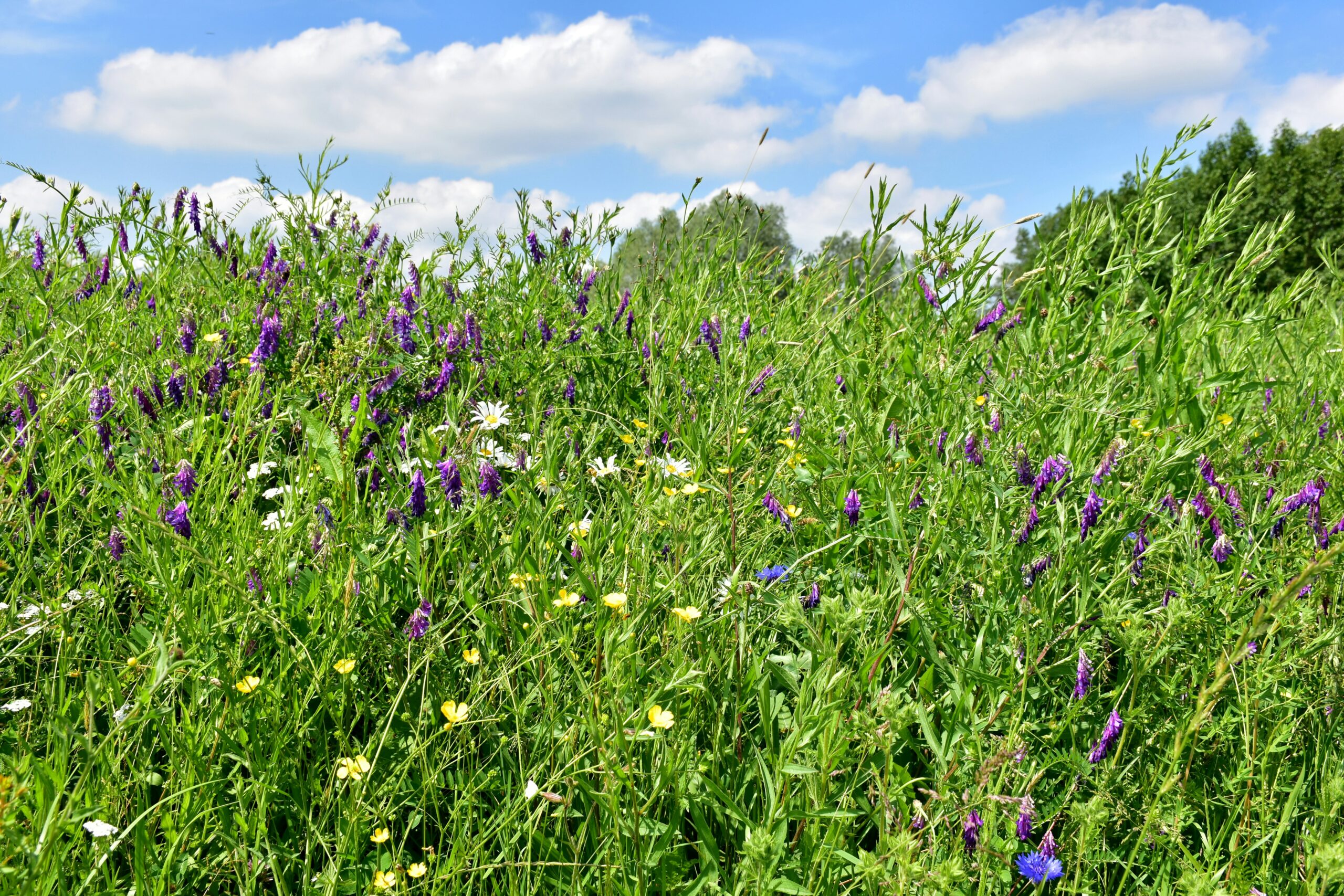
Our proposals include the creation of species-rich grassland using a locally sourced wildflower meadow seed mix, alongside an increase in areas planted with wild bird seed mixes as well as pollen and nectar-rich plants. These measures will help enhance biodiversity across the Site by providing valuable habitats and food sources for birds, pollinators and other wildlife.
Further ecological improvements will include infilling gaps in existing hedgerows and establishing new native hedgerows to strengthen habitat connectivity. Native trees will also be planted around the Site boundary, using species consistent with those already present on the Site and within adjacent woodlands, helping to integrate the development into the surrounding landscape and enhance its ecological value.
Frequently asked questions
Answers to the questions we are asked most often. If yours is not here, please get in touch.
Where is the solar farm?
The site is on farmland north of Wickford, in Chelmsford.
How big is the solar farm?
The site is approximately 36 hectares (around 89 acres).
Will the power produced be used locally?
Yes. All the power produced would be exported to the local distribution network and used locally, unlike some larger projects that connect to the national transmission network.
Why have you selected this site?
The site was selected for its suitability to accommodate a solar farm while retaining most of the land for agricultural use. The land is classified as Grade 3B, indicating lower agricultural value, and has no significant planning or environmental constraints.
Will the project affect local biodiversity?
The proposal includes new landscape planting and improvements to biodiversity, resulting in a net gain in excess of the statutory 10%.
How long will it take to build?
Construction would take between 6 and 9 months.
How long will the solar farm operate for?
The solar farm would operate for 40 years. It would then be decommissioned and the land returned to agricultural use.
What impact do solar farms have on food security?
Solar farms give farmers a valuable, guaranteed income that is not affected by weather, market prices or rising production costs. That means farmers can keep farming the rest of their land with confidence, partly sheltered from those pressures.
The Government’s Land Use Framework for England estimates that meeting its clean power targets would need solar farms on around 1% of land in England, which would not undermine food security.
Why don’t you put solar on rooftops?
We support more solar on rooftops, and the Government already plans to speed this up through its Solar Roadmap.
However, the Clean Power 2030 target of 45 to 47 gigawatts of solar cannot practically be met on rooftops alone. The Solar Roadmap estimates that around 20% could come from homes, 15% to 20% from commercial rooftops and small ground mounted schemes, and 60% to 65% from large ground mounted projects.
The roadmap explains that the main barriers to more rooftop solar are grid connection rules, finance, and a lack of incentive for landlords, because it is usually the tenant who pays the electricity bill.
How can I give feedback on the project?
We are keen to hear your views. The public consultation will run until 30 November 2026, and until then, you can comment on the proposal and help shape its final design. Send us your comments.
Tell us what you think
Your comments will be considered before a planning application is submitted.